All Blog Posts
-
Get Ready for Foxe & Kennard!
Coming May 5th 2026
Stay tuned for more news …

-
The Final Vow
The Final Vow
(Washington Poe 7)
M.W. Craven
Buy from Amazon.
Buy from Bookshop.org and support independent sellers.Well, he’s done it again!
Those of you who have followed my reviews over the years, will know that I am a HUGE fan of M.W. Craven’s writing, in particular his brilliant Washington Poe and Tilly Bradshaw series.
You can read those reviews here: (Please note my reviews only start with book three as The Puppet Show and Black Summer predate my blog).
First of all a warning: As with all these books, it can be read as a standalone, but unlike previous entries in the series, the author recommends you at least read the previous instalment The Mercy Chair first, because the inclusion of certain characters and facts will potentially spoil that novel – and to be honest, read it anyway, because The Mercy Chair is another absolute blinder and why would you deny yourself that pleasure?
In fact, if you haven’t done so already, read the whole series, starting with the award-winning The Puppet Show. I promise you, you won’t regret it, and seeing the relationship evolve between Poe and Tilly over the years is a real treat.
As always with this series, the book is a winner on two levels. First the aforementioned Poe and Tilly. You could plonk this odd-couple in any book on any subject and have a hilarious and joyful experience. They are that good. But of course we aren’t just here for the characters and the laugh-out-loud, gloriously dark humour. The second level is the brilliantly-plotted story. Fast-paced with lots of twists and turns and ingenious devices, again, you could craft a cracking story even with an average cast of characters. Blend these characters with these plots and you have books that not only raise the bar each time, they set the bar for everyone else.
I won’t spoil the plot beyond what is available on the blurb or Amazon preview, suffice to say the opening is a real shock and you spend most of the book wondering just how he’s going to resolve it. Along the way the body count rises and Tilly and Poe are placed in real jeopardy. With short, punchy chapters and Craven’s masterful eye for a great gag, mixed with moments of heartfelt anguish, this was a page-turner in the truest sense. I blasted through it in a couple of days, all the while telling myself I should slow down to relish the ride.
Fortunately, despite the title, The Final Vow will not be the end of the series (not a spoiler, Craven has been publicly open about there being more to come). However, there is significant character evolution in the book and the possibilities opened up promise new and exciting directions to come.
I can’t recommend highly enough.
-
Calling all aspiring crime writers!

Fancy a bespoke critique of the opening of your crime novel?
Places still remain for one-to-one sessions at the South Warwickshire Literary Festival on Saturday 20th September.
I will read and give feedback on the first 2,000 words of your crime novel and with the help of a one-page synopisis on where you want the novel to go, will give you objective feedback on how to improve and get ready to submit your story.
Time is ticking so follow the ticket link here before September 1st and follow the instructions!
Good luck!
-
Elong Way Home
Elong Way Home
This is a short piece written as homework for the Coventry Writers’ Group. The theme was ‘Mars’.
This seems especially topical right now. 😁Elong Way Home
I stare as the rocket ship blasts its way into orbit. Horror washes over me.
They’ve gone.
I am now the only human being on the planet Mars.
In the film The Martian, Matt Damon’s character is left behind after his crewmates believed he was killed.
Yet nothing like that happened here.
I was out in the rover, chatting to my crewmates over a working radio link.
The radio went quiet, but I thought nothing of it. I’ll admit that small talk isn’t my thing, and after one-too-many political discussions, we’ve only been speaking when necessary.
There had been no indication that they were planning to leave.
I drive back to the main habitat. Somebody has added angled lines to the large letter X on the side of it. Yeah, very funny guys.
My wrist computer vibrates. A message from Earth.
A screen shot from a poll on X – how ironic.
Two options.
1) Bring him back.
2) Leave the tosser behind.
98.2% in favour of two.
Screw you I shout, before raising my arm straight, palm down, and saluting the vanishing ship.
It seems that paying for the trip isn’t enough to buy me loyalty.
Another vibration. This time a text message.
“Sorry Elon, the polls don’t lie – ditch you or I’ll never serve a fourth term. You’re fired, Donald.”
-
TuesdayTips208
To Evolve Or Not Evolve?

Welcome to this week’s TuesdayTip.
One of the attractions of ongoing series is the evolution of characters as the books progress. In my own DCI Warren Jones series, we see Warren go from a newly-promoted DCI in a new police force, to a seasoned and respected senior detective. At the same time, his relationship with his wife Susan has ups and downs and he gets older (and hopefully wiser). Alongside him, the members of his team undergo similar changes, with new members joining and others leaving. We also see secondary characters, such as Warren’s beloved grandfather and his (not always so beloved) in-laws face challenges.But is such evolution essential? Can characters essentially stay the same over multiple books? Perhaps the author hits on a secret formula that means they can make the protagonist essentially unchanging? Some might argue that the film version of James Bond, although reinvented by film makers over sixty years to reflect the changing world he exists in, doesn’t show huge amounts of evolution. I’d disagree that Jack Reacher has remained entirely immutable in the twenty-eight years since The Killing Floor, but broadly speaking he is the same person, albeit a bit older.
What triggered this train of thought?
Over the last couple of years, my wife and I have been binge-watching classic comedies that we missed the first time around. The original series of Frasier started when I was at university and I didn’t always have access to a TV, so it passed me by when it first aired. Similarly, Seinfeld, which we have just started watching, was aired when I was a bit too young to appreciate it.
Over the course of Frasier‘s first run it is really interesting to see how the main characters change – the essential character traits change remain fixed, but they are unquestionably different people by the time the series finished.
How I Met Your Mother is another series that showed enormous changes over its lengthy run.
However, I recently read some background on Seinfeld and was intrigued to see that its co-creator, Larry David, was adamant that the characters wouldn’t change appreciably over time. The character traits established in series one would remain largely fixed. They won’t learn from their mistakes and they won’t ‘grow’ as people. We’ve only just started watching, so I will be interested to see if this holds true.
Well, if Seinfeld, one of the most highly respected comedies in recent decades feels it can dispense with evolution, does that mean we as writers of crime fiction can do so? Or is that unchanging scenario a feature unique to comedies, where the initial setup is such that they have plenty of material to explore? Do readers want to see characters change, or remain fixed in time?
What are your thoughts?
As always, feel free to comment here or on social media.
Until next time.
Paul
PS: If you are a writer with a tip to share, or fancy writing a fictional interview between you and one of your characters, please feel free to email me.
-
TuesdayTips207
Block Buster
Ideas To Thwart Writer’s Block

Sing Me A Story
Hello everyone, it’s time for another Block Buster – a fun writing exercise to either bust that writer’s block or just enjoy yourself.
Music and writing have long been partners. Lots of writers I know use favourite playlists to get them in the right mood for whatever scene they are writing.
But what if the song itself inspired the story? Sure, lots of pop songs (especially those from the 80s!) are basically rhyming gibberish if you listen too carefully to the lyrics. But even the most nonsensical drunken party ballad often has a single line that could form the basis of a story.
- For example, why in Black Lace’s Agadoo do they feel the need to push pineapple shake a tree?
- Perhaps more promisingly, who was the man killed by Mama in Bohemian Rhapsody? Why did she put a gun against his head? What does the singer mean by pulled my trigger?
- And what sort of bizarre, drug-addled social event found Procol Harum skipping the light fandango and turning cartwheels? And who is this vestal virgin, whose face turned a Whiter Shade Of Pale?
All you need to do is find an interesting song, then look up the lyrics (Google is your friend here) and search for inspiration!
Legal Disclaimer
Be careful if you decide to incorporate the actual lyrics into your piece. It’s fine if it is just for your own amusement, or to share with your writers group, however commercial use in a published piece may require you to pay a licence fee to the songwriter/music company. This can cost a pretty penny, and even more if you don’t and they sue you. Perhaps just allude to the lyrics as I have above?
Good luck!
Remember the rules:
- Set yourself a time limit.
- Write without stopping, editing or overthinking.
- Write whatever comes to mind and don’t worry if it doesn’t make sense.
- It doesn’t matter if it has nothing to do with the scene that you are stuck on.
If you are a writer with a tip to share, or fancy writing a fictional interview between you and one of your characters, please feel free to email me.
Have fun,
Paul
-
TuesdayTips206
Synopses.
The Long Then The Short Of It.

Welcome back to this week’s #TuesdayTip.
If there is one thing authors love to moan about, it’s writing synopses. The distillation of your beloved 300+page book baby into a couple of pages or fewer is a chore that only the most masochistic writers enjoy.
But, like taxes and Bank Holiday roadworks, they are a necessary evil.
If you are submitting to an agent or to a publisher, then they are going to ask for a synopsis of what you have written. The first thing I have to emphasise is just how important it is to follow their guidelines. It doesn’t matter how good you think you are, if you don’t follow the agent/editor’s instructions you are falling at the first hurdle. There are literally thousands of wannabee authors submitting every day and over-worked agents and publishers are looking for an easy way to cull their towering reading pile. Somebody who submits a four-page synopsis, rather than the requested 500 words is going straight on the reject pile, sight unseen.
Resist the urge to cheat! Pretty much all submissions are electronic these days, so you can no longer hide behind a tiny font size to give them 1200 words rather than 1000 words. MS Word has a wordcount at the bottom of the screen and as they scroll down the document, it’ll helpfully tell them you chose a font-size of 11.2 to squeeze a few extra words on the page. You have been warned!
What is a synopsis?
Within the submissions world, the meaning is quite clear. It should be a complete account of the story, including any twists and the ending. As writers, our instinct is to tease without giving away spoilers. Unfortunately, that isn’t what they are looking for. They need to know, straight off the bat, whether your book will deliver a satisfying story that works, and that includes the payoff at the end. I feel a little sorry sometimes for editors and agents, as they typically know who dunnit before deciding to read the complete manuscript – they don’t get the pleasure of a first-time reader being blown away by that last-minute plot twist that turns everything on its head.
How long should the synopsis be?
Now we’re getting down to the nitty gritty. It all depends what the agent or publisher want. Some are very prescriptive (1000 words or no more than 2 pages), others less so (a “short” synopsis or a “full” synopsis). For full, you can probably get away with a couple of pages. For short, perhaps one page. Who can really tell?
So how do I approach this?
First of all, this is not something you knock out in an hour. It is not a last minute job. You’re going to want to set aside a day or two to get it right.
It will also take several steps – each of which you should save as a separate document. You’ll see why later.
Draft One – the complete, nothing spared synopsis.
This is a complete account of the book. It needs the all the major plot points, red herrings and twists. There should be some basic background on characters and perhaps the B-story (eg the characters’ strifes and struggles). It’ll probably be several pages. That’s fine, because nobody else will ever see it. SAVE IT then start a new document.
Long synopsis
I find it best to now start the trimming. Aim for 2-3 pages. What don’t you need? Is all the backstory relevant?
This is probably still a bit long for submission, but hang onto it, as you never know … SAVE IT then start a new document.
One-two page synopsis
Now the pain starts. This is where you need to make some decisions. How important is the character development and backstory? The plot is likely to be the main driver here – because for genres like crime fiction, it’s all about the story. However if there is something really unique about your central character that you think may be a selling point (murder mysteries solved by talking horses are a woefully under-represented sub-genre) or perhaps the location (everything takes place in a windowless bathroom), then you must take care not to throw the baby out with the bathwater. SAVE IT then start a new document.
One page
This is a common request. Everything on one page. By all means get rid of wasted space (Word’s current default seems to be white spaces between paragraphs), but don’t be too clever – they’ve seen all the tricks.
Use the most sparing language – make your prose descriptive and efficient. They will get a feel for your beautiful turns of phrase when (if!) they read your opening chapters. SAVE IT then start a new document.
500 words
I know! Crazy, right? Suck it up, give them what they want. Dig deep. Major plot beats only. Every word and every sentence fights for its place. What’s the plot twist or clever bit of deduction you are most proud of? Can you distil it into a sentence? SAVE IT then start a new document.
Two paragraphs
Yeah, you read that right. After the pain of distilling my book to 500 words, with all the steps in between, my wife consoled me with “well at least you now have versions of the synopsis for every eventuality”. Then I came across this particular publisher. There was swearing; there may even have been a couple of tears. But I did it, and you can too.
Quick wins.
Cut out invisible words such as “that”. See Tip72 for more on this.
What do you think of writing synopses? Have you any tips you can share? Are you one of those oddballs that actually enjoy the process (I’ve heard they exist, but won’t believe it until I meet one).
As always, feel free to share here or on social media.
Until next time,
Paul
PS: If you are a writer with a tip to share, or fancy writing a fictional interview between you and one of your characters, please feel free to email me.
-
TuesdayTips205
TV Review
Forensics: Murder Scene

Welcome back! Two weeks ago, the TuesdayTip was a review of Channel 5’s excellent Police Suspect Number 1 (Tip#203). This week, I’m recommending another Channel 5 documentary series Forensics: Murder Scene.
https://www.channel5.com/forensics-murder-scene
As the title suggests, this show focuses much more on the forensic science, with the regular contributors and featured experts largely being crime scene managers, forensic biologists, ballistics experts and other scientists. This time it’s West Yorkshire Police throwing open their doors.
It is an excellent companion piece to the previously mentioned Police Suspect Number 1, and is really useful for those of us whose police procedural fiction likes to feature both the work of the detectives and the experts supporting them.
One of the interesting features of this programme is it is very honest. One of the recent shows featured (I’m being circumspect to avoid identifying the case and spoiling it if you haven’t seen it), was followed for a couple years. It was a detailed and sprawling investigation, featuring some excellent detective work and diligent forensics. To the surprise of these armchair detectives (and the victims and police), the accused were actually acquitted at trial. Formally this means the case remains open, but you got the sense that the police and all those involved are pretty convinced they had the right people, and that for whatever the reason, the prosecution failed to carry the case across the finish line.
The law of double jeopardy means that the accused cannot be tried again, and the circumstances of this case mean it unlikely that an appeal to the Supreme Court would allow this case to be reopened in the light of compelling new evidence. I suppose the only comfort in such cases – and it is very cold comfort indeed – is that the suspects lead the sort of chaotic lives that mean they are almost certain to end up behind bars for other reasons – one can only hope that the damage they inflict along the way is minimal.
I strongly recommend this for fans of the genre, for viewers interested in the processes and science, and for writers seeking authenticity.
What are your thoughts on this show? Are there any other shows you would recommend in a similar vein?
As always, feel free to comment here or on social media.
Until next time,
Paul
PS: If you are a writer with a tip to share, or fancy writing a fictional interview between you and one of your characters, please feel free to email me.
-
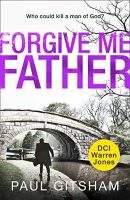
Forgive Me Father
This is a short story, written for Coventry Writers’ Group. The theme was “Seven Deadly Sins”. This was my interpretation. Enjoy!
Trigger warning – contains references to abuse that some readers may find upsetting.
“Forgive me Father, for I have sinned.”
The confessional is shadowed, but the voice belongs to a young man. Father O’Connell runs through the preamble on autopilot, then settles back to listen to the man’s transgressions.
“I have committed all of the deadly sins,” says the visitor.
“Tell me,” the priest instructs. This’ll be more interesting than the usual old ladies there only because tradition dictates they receive penance before taking communion.
“I confess to pride,” starts the man. “In my appearance and in my accomplishments.”
O’Connell grunts encouragingly.
“And yet I remain envious of others. I have no need for increased wealth, but my greed drives me to gather more. But … sometimes a darkness descends on me, and I can’t bring myself to move. I am consumed by sloth.”
“Do you know what drives these passions?” asks O’Connell, his curiosity triggering a rare interruption. Something about the voice is familiar.
“My upbringing,” says the man firmly. “I was abandoned as a child, then raised in a loveless environment. There was never enough to go around, and the result when I finally had more than necessary was gluttony.”
O’Connell is feeling uneasy. The voice behind the grill has a manic edge. The bishop recently instructed priests to gently persuade those in turmoil to seek outside assistance beyond the spiritual. In O’Connell’s opinion The Church has muddled along just fine for 2,000 years without such nonsense. But, he concedes other professionals might have something to offer; what the man calls sloth, sounds more like depression. Before he can open his mouth, the man continues.
“And then there is lust. The unspeakable, unnatural acts that I experienced as a child awakened dark desires. Devilish desires.”
O’Connell starts to sweat. It’s not possible, he tells himself. After the … incidents … at the home, his then-bishop had moved him on. To this small, far-flung parish. How many priests in the UK share his name?
“Well, Jesus forgives all of our weaknesses,” starts O’Connell. He wants this over, desperate to prescribe a few Hail Marys, then leave by the back exit.
The man giggles. “I’m afraid I’m here under false pretences, Father. I don’t want your help seeking forgiveness.”
“Then what do you want?” O’Connell croaks.
“To complete the set.”
O’Connell casts his mind back. He counts six sins. Panic mounting, he struggles to recall the missing vice.
It is his final thought before the bullet rips through the thin grill separating him from his victim.
Wrath.
-
TuesdayTips204
Writing LGBTQIA+ Characters

Hello everyone, today’s #TuesdayTip addresses a sensitive topic that often worries writers – how to write authentic characters from the LGBTQIA+ community that don’t cause offence.
First of all, I am certainly no expert! I am a straight, white male, whose lived experiences reflect that background. So writing about characters whose identities are different to that requires some extra thought. This article is very much my perspective on the issue, and I am happy to be corrected or educated by those better informed.
In many ways, there are parallels to writing characters from a different ethnic or cultural backgrounds, a theme I explored way back in Tip#77 Colouring Outside The Lines.
Many writers choose to avoid the potential pitfalls by simply avoiding having characters who aren’t straight and cisgendered (the gender they identify with matches the biological sex they were assigned to at birth -ie male or female). The problem, is that when the size of their cast of characters expands, that becomes less reflective of our modern reality and so arguably impacts the realism of the story. Walk down any high street in modern Britain and of the strangers you pass, a significant proportion will identify and potentially live as something other than straight male or female. So if that is the case, then shouldn’t our books reflect that?
This also runs the risk of further hiding and marginalising members of society who don’t fall neatly into one of the two boxes we have traditionally assigned people to.
Another approach is for authors to say “none of this matters – I’m writing a thriller or a murder mystery, not a romance, so leave it up to the readers’ imaginations.” That’s fine. But you do have to take care here. If you think about it, if one of your lead characters is in a heteronormative relationship as part of the backstory and character development (it may not impact the story, but we like our characters to be three-dimensional), then why is such information not included about other characters? All I’m saying is to take care when crafting characters and deciding what characteristics to include.
How Do I Include Realistic Non-heteronormative Characters In My Book Without Causing Offence Or Being Too Heavy Handed?
Well the first thing to do is make sure you’ve done your research. I’m going to largely pass the buck here to a really interesting and useful source “Pride Reads”. [https://www.pridereads.co.uk/] This is a free blog with a regular email newsletter that posts articles designed to help writers navigate this topic. It’s full of practical tips, as well as thought-provoking articles. It is non-patronising and doesn’t preach. I’ve learned loads of interesting stuff that I hope makes me a better person as well as a better writer. There are also useful resources, such as when to consider sensitivity readers etc.
An especially useful resource are articles describing what stereotypes to avoid.
Although I am far from an expert, there are a few useful bits of information that I will summarise here to get you started.
What does the LGBTQIA+ alphabet soup mean?
Over the years, the LGBT acronym has expanded to include ever more letters. So here is a very simple thumbnail sketch of what these letters mean. However, I would urge you to do your own research for a more nuanced and detailed explanation for each.
Please note those marked with ** include the Essential Caveat that how the terms man or woman are used in this context and their definition does matter – you may need to do more research.
L – Lesbian. Women who like women.**
G – Gay – although also including gay women (eg Lesbians), this would often refer to men who like men.**
B – Bisexual – individuals who like men and women. ** This is one that is definitely more nuanced than my one line description.
T – Trans ** An abbreviation of transgender, this is a complex and fascinating subject on its own. It includes, but is not limited to, individuals who live as a different gender to the biological sex they were assigned at birth. This involves a spectrum from those who dress and perhaps live differently to traditional gender norms, to those who have had medical procedures or treatments. It also includes those who are non-binary (they don’t identify as male or female), or who are gender-fluid (their identity may be a mixture or may change and evolve depending on circumstances). This is a really nuanced term and I would urge you to do your research and perhaps sketch out your character before writing them, rather than making it up on the fly. Which is good advice for character development anyway.
(Note the term cis is simply the opposite to trans – so a person whose gender identity corresponds to the sex they were assigned at birth would be referred to as cis. In the same way a person whose sexual preferences are heterosexual might be referred to as straight if it was necessary to label them as such. Remember sexuality and gender identity are two different things, trans doesn’t = gay and cis doesn’t mean straight.)
Q – Queer This is an umbrella term for individuals who don’t feel they fall into the traditional heteronormative way of labelling people. If you use this term, be aware that it used to be a pejorative term used as an insult, but has been reclaimed in recent decades by the community. So consider the context of your story.
I – Intersex this term describes those who physical or genetic characteristics don’t necessarily align with the traditional binary notions of male and female bodies. As our understanding of anatomy has evolved beyond the basic two XX chromosomes = female and XY = male, with the corresponding genitalia, this is now seen as less of a disorder, more a reflection of natural human variation. Again, context is essential here – the language and attitudes towards an Intersex individual, and their lived experiences, will vary enormously depending on the time period, society and culture that your character is living in. The term hermaphrodite is an offensive slur – so don’t use it casually, unless your story needs it (eg as an insult).
A – Asexual This is an umbrella term for those with a lack, or low-level of, sexual attraction to others. Again, it is nuanced and complex, with a spectrum from a complete lack of any desire for sexual attraction or a limited attraction under specific circumstances. Some individuals may be Aromantic – meaning they are uninterested in romantic attachments – whilst others experience romantic or emotional attraction to others and desire intimacy, but not necessarily sexual intimacy. Some individuals may engage in sexual activity, for a range of reasons ranging from the practical (eg procreation), for companionship or to please a partner. Obviously, this is a potentially very sensitive subject, so again develop your character accordingly. Asexuality is different from celibacy – a choice to abstain from sexual activity.
+ Plus – everything else. As you have no doubt realised, sexuality and gender identity is a complex and changing landscape. The plus represents that. There are many other terms and identities such as pansexual and individuals may come under one term, be represented by multiple terms or perhaps not feel that they fit any terms. The plus allows for that diversity.
Some simple take messages that I have learned.
Fair and accurate representation is what’s important
From reading the blog posts by Pride Reads and other sources, it seems that what LGTBQIA+ readers (and viewers) want most of all is to be recognised and made a part of the stories they read. They aren’t asking for special treatment or demanding that all stories have visible lead characters from their communities. What they want is to read strong, well written stories that reflect society as it exists and where appropriate recognise their community’s role within it. They don’t want to be shoe-horned in to increase diversity, rather they want characters that exist in an organic manner and have their role to play, big or small. Just like anyone else in society. Don’t use sexual or a gender identity as a way to make your writing more diverse, rather try to write naturally diverse and realistic stories that happen to have a range of different characters. You aren’t playing diversity Bingo!
Identity does not have to be the “story”.
The sexuality or gender identity of characters does not necessarily have to be a story in and of itself. Ask yourself this question. If you are writing a police procedural, how is sexuality and gender identity addressed for your heteronormative and cis characters? Do you dwell on your male detective’s relationship with his wife? If not, why would you dwell upon a lesbian character’s relationship with their girlfriend? If you mention a detective is having difficulties because her long hours are affecting her homelife with her husband, then could a gay detective be having the same issue with his husband? Try not to treat LGBTQIA+ characters differently, just because of their sexuality, unless it is key to the story.
Coming Out stories are tricky
A recent article on Pride Reads stated that many LGBTQIA+ readers are getting bored of “coming out” stories. Every person is different and experiences can vary enormously. Writers don’t usually write about heteronormative characters’ journeys to accept their sexuality or how they announced it to their loved ones, so unless it is really necessary and a part of the story, don’t feel compelled to explain how your lead detective came out to their loved ones twenty years ago. In other words ask if it is necessary or just a way to convince yourself that you are a diverse writer.
Killing LGBTQIA+ characters
The final point is a sensitive issue. Oftentimes LGBTQIA+ readers feel that queer characters are disproportionately killed off or treated as victims. A recent well-known thriller series (I’m not naming it to avoid spoilers) culminated in the queer lead characters dying at the end. Some viewers, who had grown very attached to the characters and felt that their visibility in the series was an important cultural landmark, were very upset. Others suggested that the denouement of the story needed the characters to die for closure, and it was irrelevant that they were queer. That’s an argument for another day. All I would urge is regardless of your intentions, carefully consider if killing that character because they are queer is appropriate, even if you think you are doing an important job eg highlighting an issue. But then the same argument should be applied to other situations eg fridging (killing a token female character so the male characters have an excuse to exact revenge) or ‘white saviour’ stories where a heroic white character gets justice (and accolades) for saving or avenging people of colour.
At the end of the day, if you feel unsure if your stories chime with the times, are accurate, or risk offence, consider seeking the opinion of sensitivity readers. Your publisher may be able to help with this, or you can contact organisations such as Pride Reads for advice.
What are your thoughts on this topic? Do you have any advice or recommendations? As always, feel free to comment here or on social media.
Until next time,
Paul
PS: If you are a writer with a tip to share, or fancy writing a fictional interview between you and one of your characters, please feel free to email me.